Harley-Davidson York Factory
Explore the history of the Harley-Davidson York factory and its pivotal role in the company’s growth and legacy.
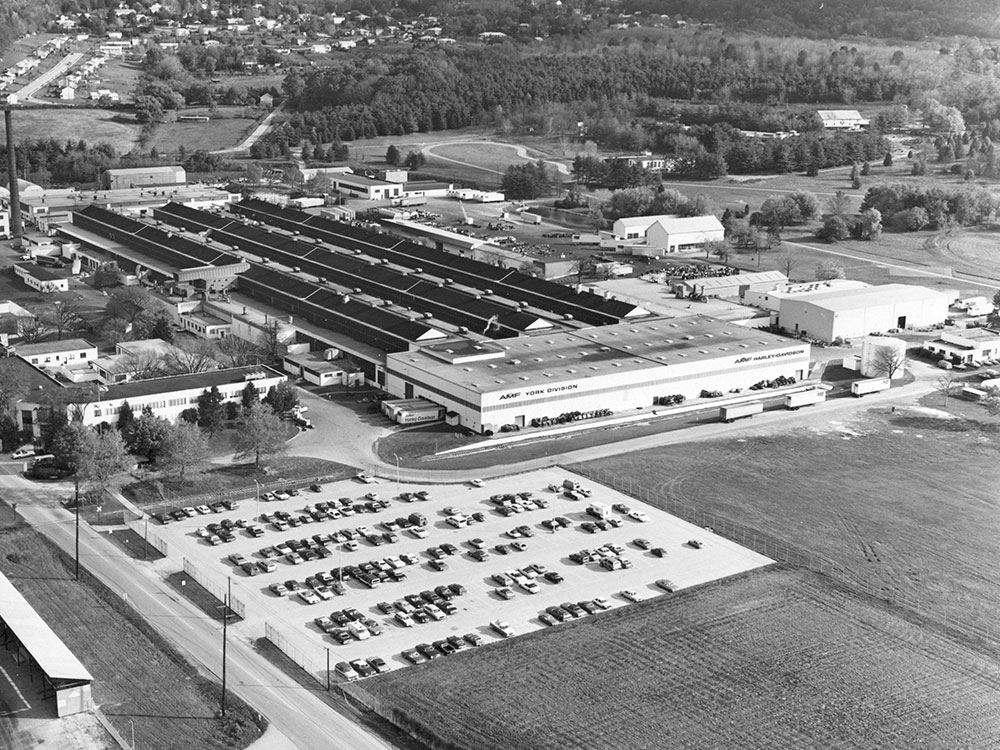
The Motor Company’s factory in York, Pennsylvania possesses a unique history in terms of the plant’s use, construction, and ownership, having not always operated as a Harley-Davidson facility. The first facility was built in 1941 under contract between the United States Navy and York Safe & Lock Co. to manufacture non-energetic ordnance, including 40mm Bofors anti-aircraft guns, mounts, and machine gun shields, and was also used as a site for proof-testing such artillery.
The first Bofors gun was produced at the York facility and delivered in January of 1942; by then, the factory employed over 3,000 people. Company President S. Forry Laucks passed away later that year, causing a decline in critical production and leading the U.S. Navy to obtain full ownership of the plant. Management was then assigned to Blaw- Knox Co., a construction equipment business based in Pittsburgh.
The factory functioned as a Special Ordnance Plant following World War II through 1964, when American Machine & Foundry (AMF) purchased the site from the Navy. The York facility filled munitions contracts for the government during this time, producing casings for 500-pound bombs, rocket motors for target drones, components for Titan missiles and radar platforms, as well as pinspotter parts for bowling alleys. In addition, the plant simultaneously manufactured a myriad of AMF leisure products, including bowling equipment, snowmobiles, golf carts, and garden tractors.
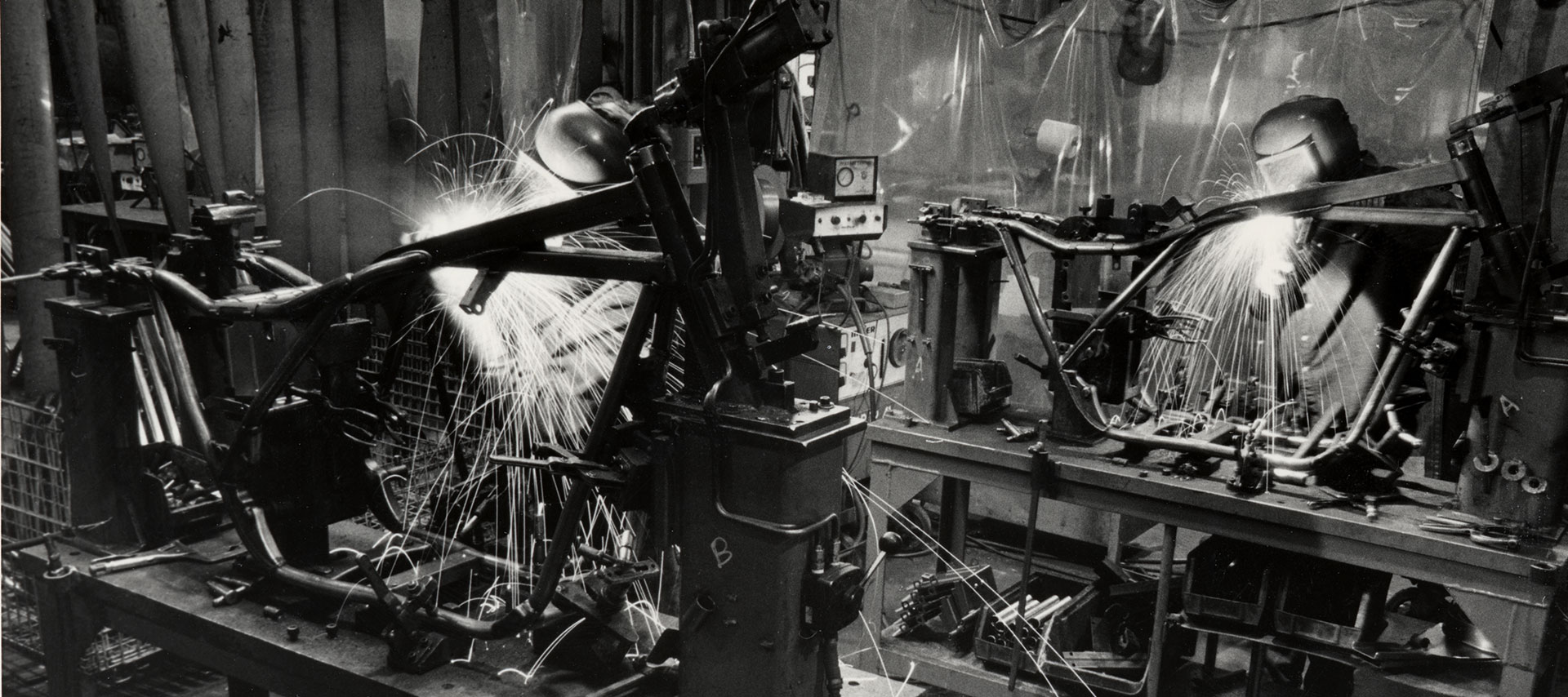
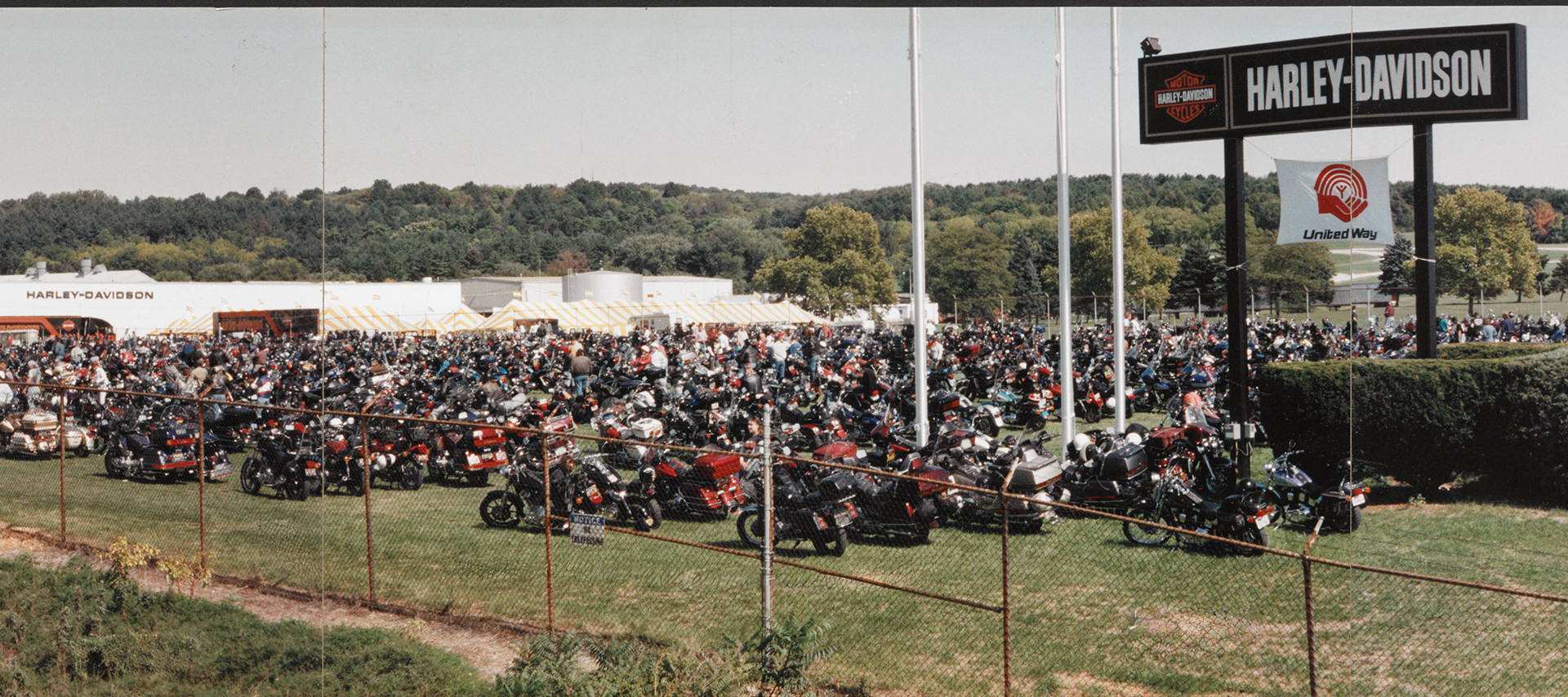
In 1969, Harley-Davidson was acquired by AMF and became the corporation’s largest subsidiary. A couple years later, plans were made to completely move motorcycle assembly operations from Milwaukee to York, keeping powertrain manufacturing and the company’s engineering and sales offices out of the transition to Pennsylvania. The move was finished in 1973, and Harley- Davidson factory tours at the Vehicle Operations York facility began later that year.
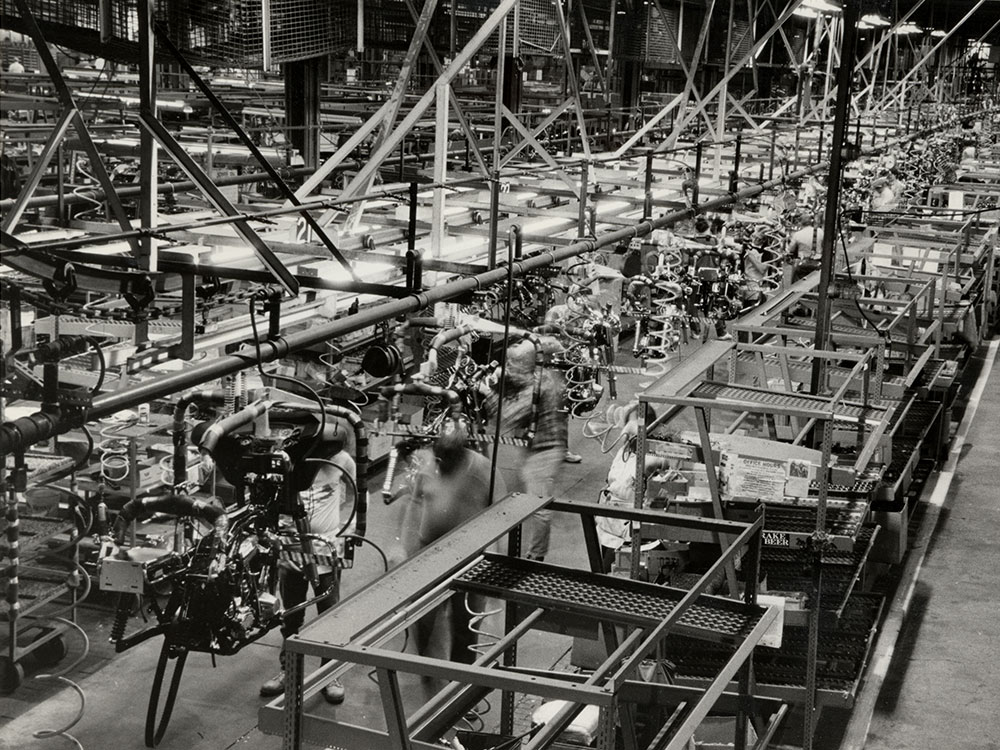
When motorcycle production was initially transferred to York, the plant employed a unique overhead conveyor system designed to continuously circulate motorcycle components, occasionally dipping down to the assembly line at particular points so that parts could be strategically removed for assembly. The conveyor system, several miles long, carried engines, wheels, frames, fenders, tanks, and more in the ongoing procession overhead. Workers below were protected from falling parts by a metal grid system between them and the overhead mechanism. After implementing the M.A.N. (Materials As Needed) methodology in the early 1980s, the overhead conveyor was no longer needed and was removed in one of several plant remodeling and updating projects to have taken place since the historic “buyback”.
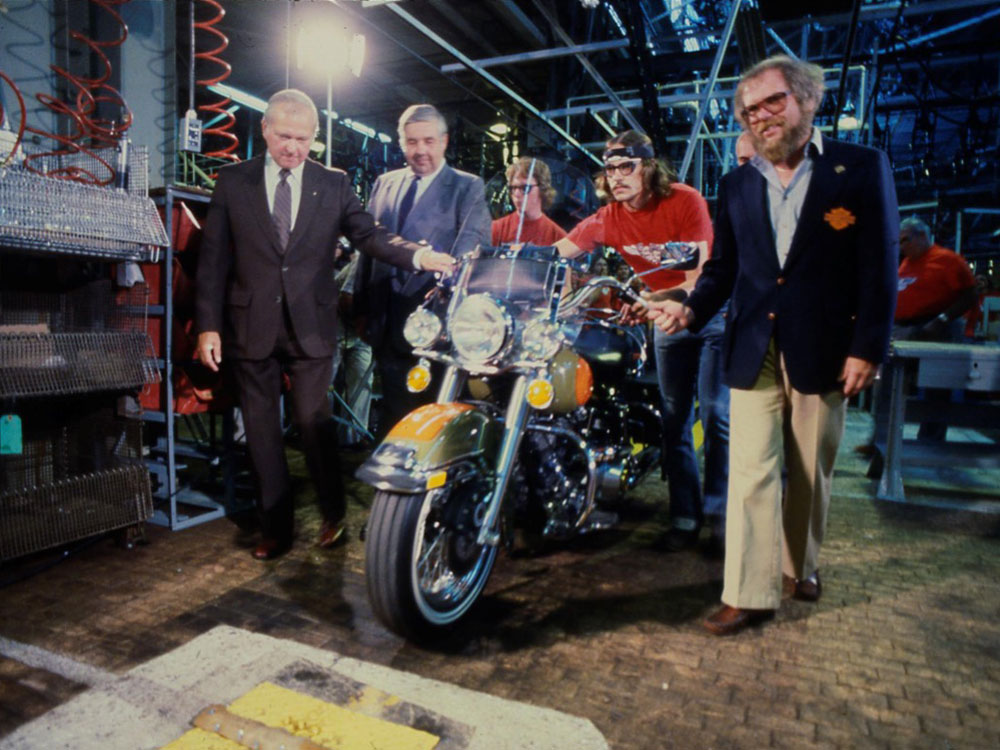
In 1981, a group of thirteen senior Harley-Davidson executives led by Vaughn Beals purchased Harley-Davidson back from AMF, the new management team aiming to focus on improving quality and manufacturing efficiency within the Motor Company. Some exciting milestones after the buyback include the production of the Harley-Davidson FXST Softail® model, beginning in 1984, and the start of the Dyna® line production in 1991. In addition to motorcycle production, York Vehicle Operations continued to fill government contracts until 1999.
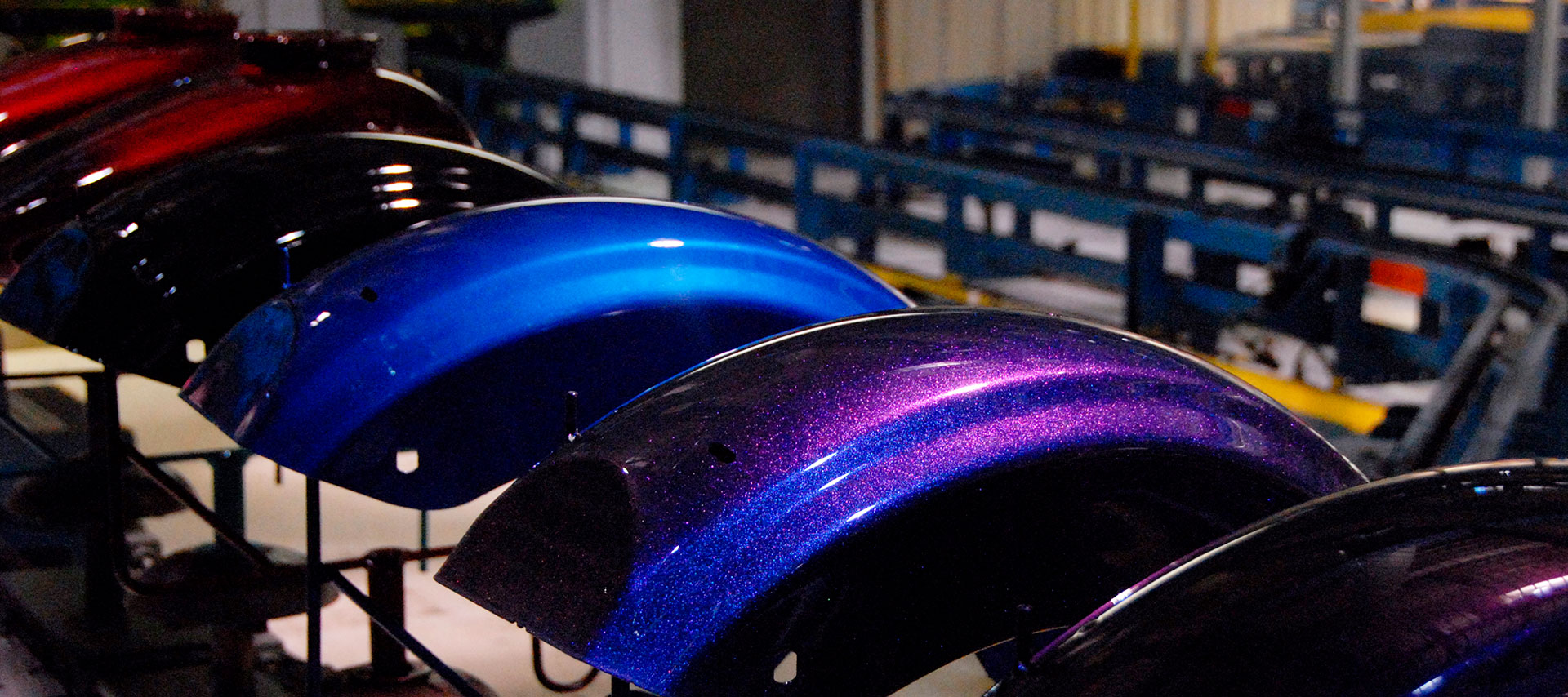
A $32 million state-of-the-art paint facility was built at the York plant in the early nineties, setting new standards not only for motorcycle paint, but for automotive finishes, as well. With dramatic increases in production, it became apparent that the York facility could not independently meet the growing demand for new Harley-Davidson motorcycles—this influenced the opening of an assembly plant in Kansas City, Missouri in 1998. The 358,000 square foot plant in Kansas City was responsible for powertrain and vehicle operations, including Sportster® and eventually Dyna® production and assembly. As demand continued to increase, a second facility at the York plant was established, which was devoted exclusively to Softail® manufacturing.
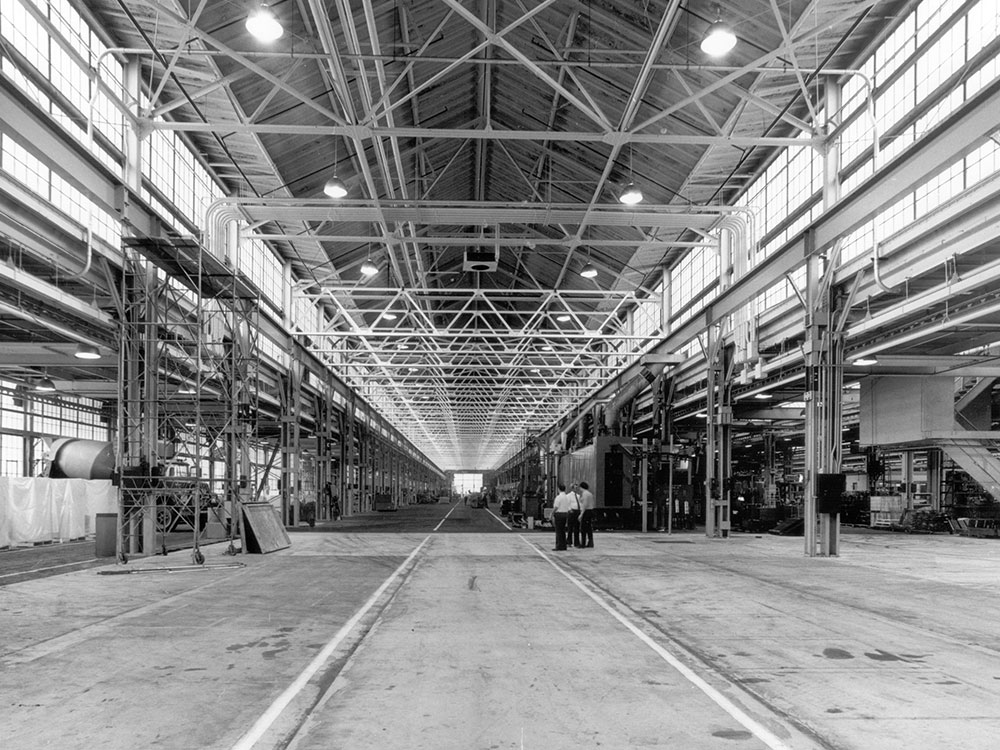
Looking at Harley-Davidson Vehicle Operations at York today, some major changes and efficient improvements are evident since it was first purchased more than 50 years ago. There was a time when York was composed of 41 separate buildings, which took up 1.5 million square feet, but currently, the York facility comprises only two buildings that together total 650,000 square feet. Before the plant’s transformation, raw material circulated through several individual buildings, eventually fusing to become a complete motorcycle. Now, materials enter one of the facility’s structures and exit the other as a finished product. In addition, the increase in production demand and the consequent opening of other Harley-Davidson operations facilities allowed the company to move from a vertically integrated production scheme to a highly concentrated system. As a result, York has become more focused on fulfilling frame, tank, fender, fabrication, paint, and assembly responsibilities, specifically.
More Historic H-D Stories
Harley-Davidson’s York Factory in Pennsylvania has a unique history before becoming a motorcycle plant. Built in 1941 for the U.S. Navy, it produced Bofors 40mm anti-aircraft guns and other ordnance. After World War II, under American Machine & Foundry (AMF), the plant made missile components and leisure products like snowmobiles, golf carts, and bowling equipment. Today, the York facility is a key site for Harley-Davidson motorcycle manufacturing, combining decades of industrial innovation with the brand’s legendary engineering and design.